
My guide and mentor in many things, including the street language of Italian youth, is Alessandro (Ale) Bertozzi, 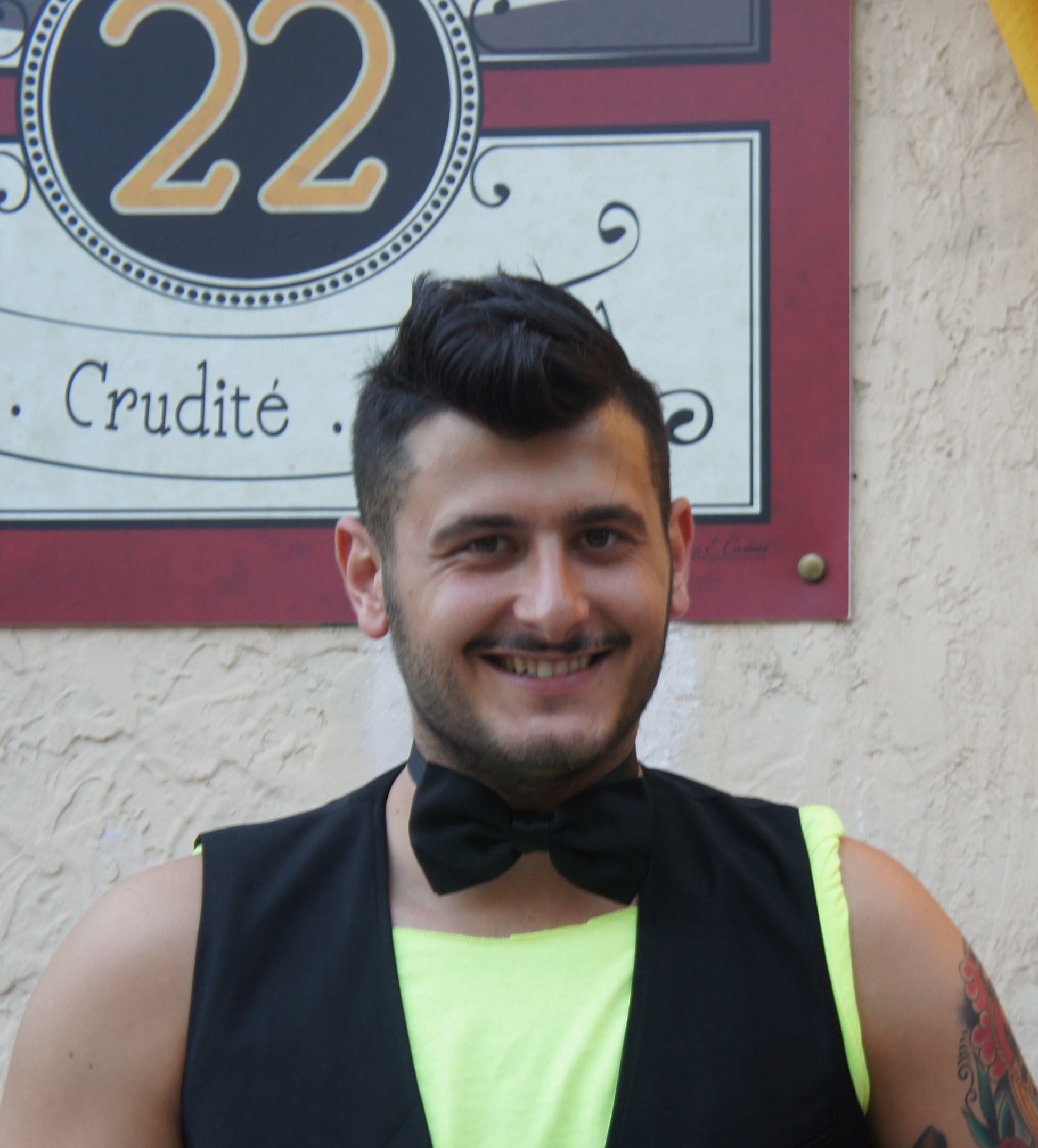 the co-owner of Bistro 22, the establishment in CDP where I spend a significant fraction of my waking hours. A photo taken last June on the White Night celebration is affixed. Another co-owner is his sister Greta, a young lady of considerable grace and charm, of whom more will be said later.
Anyway, back to the street language. The other day Ale and I were conversing in our usual mixture of languages, and for some reason, I forget what, I was interested in learning the Italian slang expression for that cleft in one’s anatomy that divides the left buttock from the right one. In recent years this cleft has materialized into common view, much as ladies’ navels came on the scene a few years before, because of the diktats of fashion to which our young (and not so young) persons are enslaved. Apparently, the fashion industry, who have always been noted for charging a higher price for using less material, in order to make savings in their cloth purchases, have lowered the waistlines of their products to such an extent that pants and the like, that used to be strapped securely around waistlines, now hang precariously from hips. In order that these self-same garments do not succumb to the laws of physics and fall off during one’s everyday activities, they need to be made tight around the hipline, an activity that has the effect of squeezing the buttocks together, thus accentuating the aforesaid cleft. We see a similar effect on the bosoms of ladies, caused by their wearing undergarments of particular design. Going back to the buttock cleft, which becomes especially evident when persons squat or bend over, my personal preference is not to see it at all; in fact, I find this anatomical curiosity to be rather repulsive in young gentlemen. However, if it must be exposed, then my preference is for the female version, a spectacle that tends to generate a measure of pleasurable warmth.
Leaving emotions and feelings aside and returning to the theme, Ale informs me that this phenomenon is referred to in Italy as “sorriso”, which translates to “smile”, or “grin”, and I find this linguistic interpretation to be exceedingly more mellifluous than the American term of “butt crack”. Even at advanced age, there is always something to be learned, it seems.
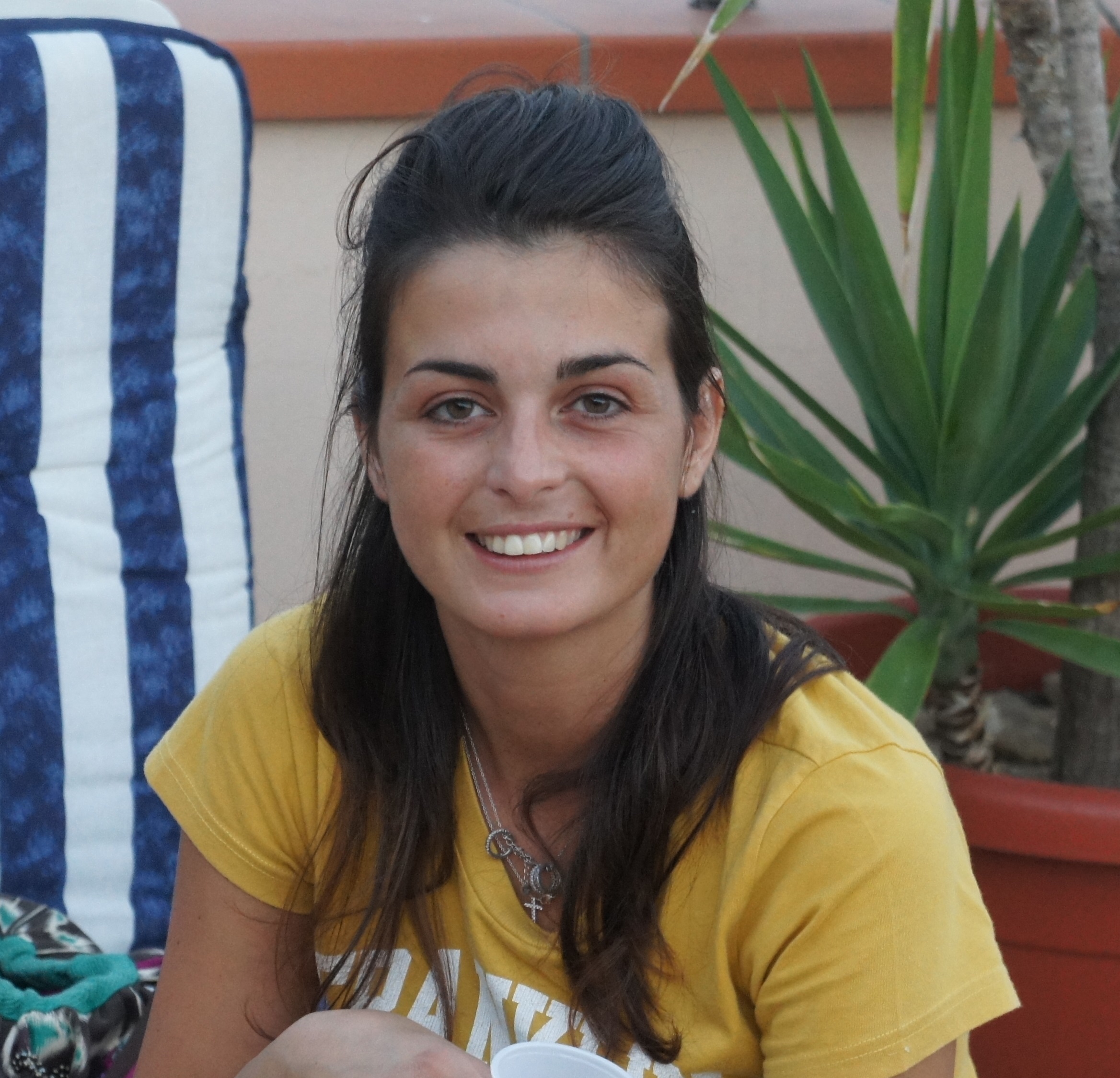 And so to Greta, whose beauty and charisma can only be hinted at in a photograph. Greta is Tuscan, born and bred, and like all such people, she speaks in the way that Tuscans do, which is different from all other Italians. All the regions of Italy have their own dialects, which are variants of the Italian language, But Tuscany is unique (as far as I know) in the way it pronounces some common words; in Tuscany you do not hear a hard “c” or a hard “g”, both are softened and aspirated into what might be confused with a throat-clearing sound. Thus, Coca Cola becomes something like Hoha Hola (Pepsi, fortunately stays the same), and if you want ice in it you would ask for Hoha Hola con hiaccio (from ghiaccio)-you get the picture. The Tuscans would have you believe that the Tuscan dialect is the true Italian. Having lived for extended periods in CDP in recent years and grown to love the place and its people, I have become sort of attuned to this, but the other morning I had stopped at Bistro 22 for a macchiato, an espresso spotted with milk. Greta prepared this in her delightful way and placed it on the bar before me and asked if I wanted “hahow”. This really stopped me for a few seconds. “What was she asking me?” Then it dawned on me; hahow is Tuscan dialect for “cacao”, viz., powdered chocolate, or cocoa, that many Italians sprinkle onto their cappuccino or macchiato. Incidentally, she refers to a caffé macchiato as a mini-happuccino!
Service from Greta always comes with a smile-on her face!
 majrodgers